About the meeting
Meiosis lies at the heart of sexual reproduction. By reshuffling parental genetic material, it generates new genetic variation – the raw material for natural selection and evolution. In plants, meiosis is also fundamental to modern breeding, helping drive improvements that support food security.
The Plant Meiosis Meeting (PMM) provides an international platform to discuss the latest discoveries in plant meiosis, with a particular focus on the regulation of meiotic progression and the mechanisms that shape recombination. The programme will also cover population and evolutionary perspectives, as well as recent advances and emerging strategies in plant breeding.
A central goal of PMM is to create a friendly, highly interactive atmosphere that stimulates the exchange of ideas between researchers and specialists. The meeting offers a unique opportunity to initiate collaborations and develop future projects, while also supporting academic exchange between early-career scientists and established leaders in the field of plant genetics.
Image credits: Arabidopsis meiocytes stained for ASY1 (orange), ZYP1 (green) and HEI10 (pink), courtesy of Esperanza Sáez Zárate (Ziolkowski Lab)
More details, including the scientific programme and registration information, will be announced soon.

REGISTRATION DEADLINE
31 JULY 2026
ABSTRACT SUBMISSION DEADLINE
7 AUGUST 2026

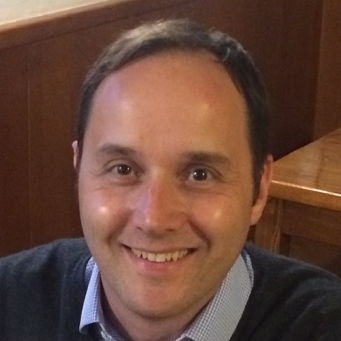
Neil Hunter
Keynote speaker
University of California, Davis, USA
About the speaker
Neil Hunter is a Professor in the Department of Microbiology and Molecular Genetics at the University of California Davis, and an Investigator with the Howard Hughes Medical Institute.
He obtained a Batchelor of Science from Manchester University and a PhD from Oxford, where he studied hybrid sterility, defining a post-zygotic species barrier mediated by an anti-recombination function of the DNA mismatch repair machinery. As a postdoc with Nancy Kleckner at Harvard University he helped define molecular mechanisms of homologous recombination during meiosis, discovering key steps in the pathway of chromosomal crossing over. As a professor at the University of California Davis, he has continued to make foundational contributions to our understanding of how chromosomes are repaired by homologous recombination and the essential roles this process plays in sexual reproduction. Pioneering work in both mouse and yeast systems, has identified interdependent roles for SUMO, ubiquitin, phosphorylation, and proteasomal proteolysis in regulating crossing over. Studies of oogenesis in mouse have uncovered a novel DNA-damage checkpoint process that mediates oocyte quality control; and revealed that intrinsic and extrinsic factors exacerbate the declining oocyte quality that is associated with maternal aging.
In 2009, Professor Hunter was awarded an Early Career Scientist position with the Howard Hughes Medical Institute; and was selected to their flagship Investigator program in 2013. He was elected to both the American Association for the Advancement of Science, and the American Academy of Microbiology in 2016; and became a fellow of The Royal Society in 2025. He also received the 2018 Chancellor’s Award for Excellence in Mentoring Undergraduate Research; and chairs a pan-campus graduate program in Reproductive Biology.
About the speaker
Neil Hunter is a Professor in the Department of Microbiology and Molecular Genetics at the University of California Davis, and an Investigator with the Howard Hughes Medical Institute.
He obtained a Batchelor of Science from Manchester University and a PhD from Oxford, where he studied hybrid sterility, defining a post-zygotic species barrier mediated by an anti-recombination function of the DNA mismatch repair machinery. As a postdoc with Nancy Kleckner at Harvard University he helped define molecular mechanisms of homologous recombination during meiosis, discovering key steps in the pathway of chromosomal crossing over. As a professor at the University of California Davis, he has continued to make foundational contributions to our understanding of how chromosomes are repaired by homologous recombination and the essential roles this process plays in sexual reproduction. Pioneering work in both mouse and yeast systems, has identified interdependent roles for SUMO, ubiquitin, phosphorylation, and proteasomal proteolysis in regulating crossing over. Studies of oogenesis in mouse have uncovered a novel DNA-damage checkpoint process that mediates oocyte quality control; and revealed that intrinsic and extrinsic factors exacerbate the declining oocyte quality that is associated with maternal aging.
In 2009, Professor Hunter was awarded an Early Career Scientist position with the Howard Hughes Medical Institute; and was selected to their flagship Investigator program in 2013. He was elected to both the American Association for the Advancement of Science, and the American Academy of Microbiology in 2016; and became a fellow of The Royal Society in 2025. He also received the 2018 Chancellor’s Award for Excellence in Mentoring Undergraduate Research; and chairs a pan-campus graduate program in Reproductive Biology.
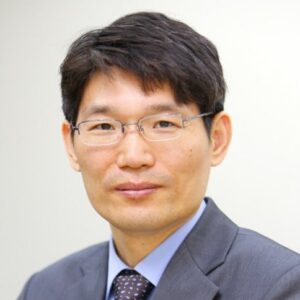
Kyuha Choi
POSTECH, Pohang, South Korea
About the speaker
Kyuha Choi investigates the mechanisms shaping recombination landscapes in plants, with a particular emphasis on how chromatin features, epigenetic regulation, and genome architecture modulate crossover formation. His research has advanced our understanding of recombination hotspots, DNA methylation effects, and meiotic DSB regulation in Arabidopsis and crop species. Choi’s work bridges molecular genetics and high-resolution genomics to dissect the determinants of meiotic variability.
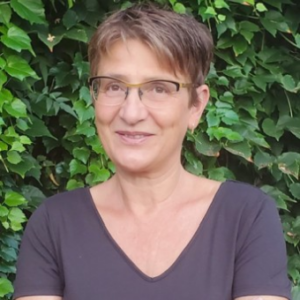
Mathilde Grelon
Jean-Pierre Bourgin Institute, Versaille, France
About the speaker
Mathilde Grelon is a prominent researcher in plant meiosis with a long-standing focus on the genetic and molecular regulation of meiotic recombination in flowering plants. Her work has uncovered key players in crossover formation, chromosome pairing and synapsis, notably in Arabidopsis thaliana. Grelon’s group integrates classical genetics, cytology and molecular biology to unravel how meiotic chromosome behaviour influences genome stability and plant fertility.

André Marques
MPI for Plant Breeding Research, Cologne, Germany
About the speaker
André Marques studies the interplay between meiotic recombination, chromatin organization, and genome evolution in plants. His research combines cytogenetics, imaging and genomic approaches to characterise crossover patterning and chromosome behaviour in diverse species. Marques has contributed to resolving how dynamic chromosome architecture influences pairing and synapsis, shedding light on mechanisms that shape recombination landscapes in both model and non-model plants.
Day 1 – Wednesday, 9 September 2026
8:00 – 11:30 am
Registration
10:30 – 11:20 am
Welcome coffee
11:20 – 1:00 pm
Session 1– Meiosis in genome evolution
Chairperson: Nico De Storme (KU Leuven, Belgium)
11:20 – 11:30 am – Conference opening
11:30 – 12:00 pm – Invited Speaker: André Marques (Max Planck Institute for Plant Breeding Research, Germany)
Shorter chromosomes, shorter loops, more crossovers: karyotype evolution and recombination in holocentric Rhynchospora
12:00 – 12:15 pm – Esperanza Sáez Zárate (Adam Mickiewicz University, Poland)
Natural variation and its effects in meiotic recombination of Arabidopsis thaliana
12:15 – 12:30 pm – Charles Addo Nyarko (Max Planck Institute for Plant Breeding Research, Germany)
Meiotic chromosome behavior in hybrid polyploid Arabidopsis
12:30 – 12:45 pm – Yennifer Mata Sucre (CNRS, France)
Beyond the challenge: unraveling the genomic landscape of homoeologous exchanges
12:45 – 1:00 pm – Dohwan Byun (Pohang University of Science and Technology, Republic of Korea)
Genome-wide high-resolution mapping of meiotic crossovers in Arabidopsis autotetraploid hybrids
1:00 – 2:00 pm
Lunch
2:00 – 3:30 pm
Session 2– Meiotic entry and progression
Chairperson: Mónica Pradillo (Complutense University of Madrid, Spain)
2:00 – 2:15 pm – Karel Říha (Central European Institute of Technology, Czech Republic)
Meiotic bodies: Drivers and regulators of meiotic progression
2:15– 2:30 pm – Nico De Storme (KU Leuven, Belgium)
The Arabidopsis dia1 mutant unveils a novel regulator of male meiotic cell division
2:30 – 2:45 pm – Nadia Fernández-Jiménez (Complutense University of Madrid, Spain)
Looking for a connection – when nucleoporins take part in meiosis
2:45 – 3:00 pm – Aybars Koc (KU Leuven, Belgium)
Auxin induces male meiotic restitution in Arabidopsis thaliana via an FDR-type mechanism
3:00 – 3:15 pm – Yixuan Gao (Leibniz Institute of Plant Genetics and Crop Plant Research, Germany)
Exploring the genetic basis and mechanisms of meiotic temperature resilience in wild barley
3:15 – 3:30 pm – Quinn Y. Johnson (Cornell University, United States)
Chromatin context & DNA replication timing patterns shape meiotic recombination dynamics in maize and Arabidopsis
3:30 – 4:00 pm
Coffee break
4:00 – 5:15 pm
Session 3 – Meiotic DSBs and crossover formation
Chairperson: Chris Morgan (John Innes Centre, United Kingdom)
4:00 – 4:45 pm – Keynote Speaker: Neil Hunter (University of California, Davis, United States)
Meiotic Recombination: the essence of heridity
4:45 – 5:15 pm – Special Guest Speaker: Raphaël Mercier (Max Planck Institute for Plant Breeding Research, Germany)
Meiotic crossover patterning
5:15 – 6:00 pm
FLASH TALK SESSION I
Youngkyung Lee (P1)
Wojciech Dziegielewski (P2)
Thiago Nascimento (P3)
Raon Hwang (P4)
Morena Gasparini (P5)
Mariya Joyson (P6)
Maria Cuacos (P7)
Maja Szymanska-Lejman (P8)
Lukas Schindler (P9)
Laura Strickx (P10)
Agata Lipinska (P11)
Jing Wang (P12)
Iqra Jamil (P13)
Franz Boideau (P14)
Hyein Kim (P15)
Julia Dluzewska (P16)
6:00 – 7:00 pm
Dinner
7:00 – 9:00 pm
Poster session I with wine & snacks
Day 2 – Thursday, 10 September 2026
9:30 – 11:00 am
Session 3 – Meiotic DSBs and crossover formation (continued)
Chairperson: Joiselle Fernandes (Max Planck Institute for Plant Breeding Research, Germany)
9:30 – 10:00 am – Invited Speaker: Kyuha Choi (Pohang University of Science and Technology, Republic of Korea)
Breaking barriers to meiotic recombination in Arabidopsis
10:00 – 10:15 am – Chloé Girard (I2BC, France)
Polymorphism can extensively reshape the genome-wide crossover landscape in Arabidopsis thaliana
10:15 – 10:30 am – Marco Castellani (Max Planck Institute for Plant Breeding Research, Germany)
Investigating plant HEI10 paralogs: Partnership in crossover control?
10:30 – 10:45 am – Seamus Curran-French (John Innes Centre, United Kingdom)
X marks the spot: Understanding the dynamics of the E3 ligase HEI10 during crossover formation
10:45 – 11:00 am – Karolina Spławska (Adam Mickiewicz University, Poland)
SCEP3 and ZYP1 in the regulation of class II crossover formation in Arabidopsis thaliana
11:00 – 11:30 am
Coffee break
11:30 – 12:00 am
Session 3 – Meiotic DSBs and crossover formation (continued)
Chairperson: Julia Dluzewska (Adam Mickiewicz University, Poland)
11:30 – 11:45 am – Nicola Gorringe (University of Cambridge, United Kingdom)
CRISPR-SunTag targeting of TET1 DNA demethylase elevates centromere-proximal meiotic crossover in Arabidopsis
11:45 – 12:00 pm – Andrew Lloyd (Aberystwyth University, United Kingdom)
MSH2 is not required for suppression of homoeologous crossovers in allopolyploid Arabidopsis suecica
12:00 – 1:00 pm
FLASH TALK SESSION II
Yu Gu (P17)
Sneha Bisht (P18)
Seijiro Ono (P19)
Sebastiaan Sommereyns (P20)
Romy Petroll (P21)
Natália Harnádková (P23)
Morgane Surget (P25)
Monika Gazecka (P26)
Marleen W. van der Wiel (P27)
Marit G. Krul (P28)
Marion Peuch (P29)
Karolina Śmiałek (P30)
Hoyeon Kang (P31)
Gwen Swinnen (P32)
Cristina Marín-García (P33)
Anna Wilhelm (P34)
Alisha Datta (P35)
Alexandre Pelé (P36)
1:00 – 2:00 pm
Lunch
2:00 – 4.00 pm
Poster session II with coffee
4:00 – 4:30 pm
Coffee break
4:30 – 6:00 pm
Session 4 – Chromosome pairing, synapsis and segregation
Chairperson: Chloé Girard (I2BC, France)
4:30 – 5:00 pm – Invited Speaker: Mathilde Grelon (IJPB, Versailles, France)
From pairing to synapsis: How homologous chromosomes recognise each other during meiosis
5:00 – 5:15 pm – Chao Feng (Leibniz Institute of Plant Genetics and Crop Plant Research, Germany)
Control of crossover patterning by the disordered domain of SCEP3 in Arabidopsis thaliana
5:15 – 5:30 pm – Joiselle Fernandes (Max Planck Institute for Plant Breeding Research, Germany)
The role of ZYP1 in limiting crossovers and maintaining meiotic stability across ploidy levels
5:30 – 5:45 pm – Amalia Ibiapino (iGRED, France)
Genomic features associated with meiotic stability in newly formed Arabidopsis suecica
5:45 – 6:00 pm – Zhongping Liu (Max Planck Institute for Plant Breeding Research, Germany)
Deciphering the molecular mechanism of meiotic recombination control during inverted meiosis in holocentric plants
6:00 - 6:15 pm
PMM Group Photo
6:15 pm
Barbecue & Social (Party)
Day 3 – Friday, 11 September 2026
10:00 – 11:00 am
Session 4 – Chromosome pairing, synapsis and segregation (continued)
Chairperson: Stefan Heckmann (Leibniz Institute of Plant Genetics and Crop Plant Research, Germany)
10:00 – 10:15 am – Annaliese S. Mason (University of Bonn, Germany)
Polyploid meiosis in Brassica: stability or selection?
10:15 – 10:30 am – Stefan Steckenborn (Max Planck Institute for Plant Breeding Research, Germany)
Holocentric chromosomes enable extensive genome loss and stable meiosis after massive karyotype reorganisation in Rhynchospora pubera
10:30 – 10:45 am – Maciej Majka (Max Planck Institute for Plant Breeding Research, Germany)
Breaking the crossover rule: stable achiasmatic meiosis enables clonal-like inheritance in the holocentric plant Rhynchospora tenuis
10:45 – 11:00 am – Tantawat Nardwattanawong (Max Planck Institute for Plant Breeding Research, Germany)
Single-Cell RNA sequencing reveals differences in male meiotic programmes in different reproductive modes and mutants
11:00 – 11:30 am
Coffee break
11:30 – 12:30 pm
Session 5 – Meiosis for plant breeding
Chairperson: Alexandre Pelé (Adam Mickiewicz University, Poland)
11:30 – 11:45 am – Jianyong Chen (Leibniz Institute of Plant Genetics and Crop Plant Research, Germany)
CRISPR/Cas9-mediated truncation and elimination of chromosomes in wheat
11:45 – 12:00 pm – Halina Pietrykowska (Adam Mickiewicz University, Poland)
MpmiR11889 controls spermatogenesis and boosts reproductive efficiency in Marchantia polymorpha
12:00 – 12:15 pm – Joanna Majka (University of Bonn, Germany)
Harnessing meiotic diversity: from natural variation to targeted crossover manipulation in Brassica rapa
12:15 – 12:30 pm – Yasmim D. Santos (Institute of Experimental Botany of the Czech Academy of Sciences, Czech Republic)
Kinetochore mutations trigger chromosome elimination in Arabidopsis interspecific hybrids
12:30 – 12:45 pm
Break
12:45 – 1:15 pm
Prize Ceremony & Conference Closing
Presentation Guidelines
Oral Presentations
Each speaker selected on the basis of an abstract will be allocated a 15-minute time slot, consisting of 10 minutes for the presentation followed by 5 minutes for discussion.
We kindly ask all speakers to keep their presentations within the allocated 10 minutes. If a presentation exceeds this time, the discussion period will need to be shortened accordingly.
Posters and Flash Talks
The majority of poster presentations will be accompanied by a Flash Talk.
The Flash Talk is a short, 3-minute presentation consisting of a single slide, with no time allocated for questions. Its purpose is to highlight the key message or most important result of your project and to encourage conference participants to visit your poster and discuss your work with you during the poster session.
Please prepare your Flash Talk slide in 16:9 format and send it to pmm@amu.edu.pl in PowerPoint format by September 6 at 12:00 PM (noon). To ensure smooth transitions between speakers, all Flash Talk slides will be combined into a single presentation by the Organizing Committee.
There will be two Flash Talk sessions, each followed by the corresponding poster session. All posters assigned to a particular poster session will first be briefly introduced through Flash Talks before the poster session begins.
Poster format: Posters should be in portrait orientation (vertical) and should not exceed A0 size.
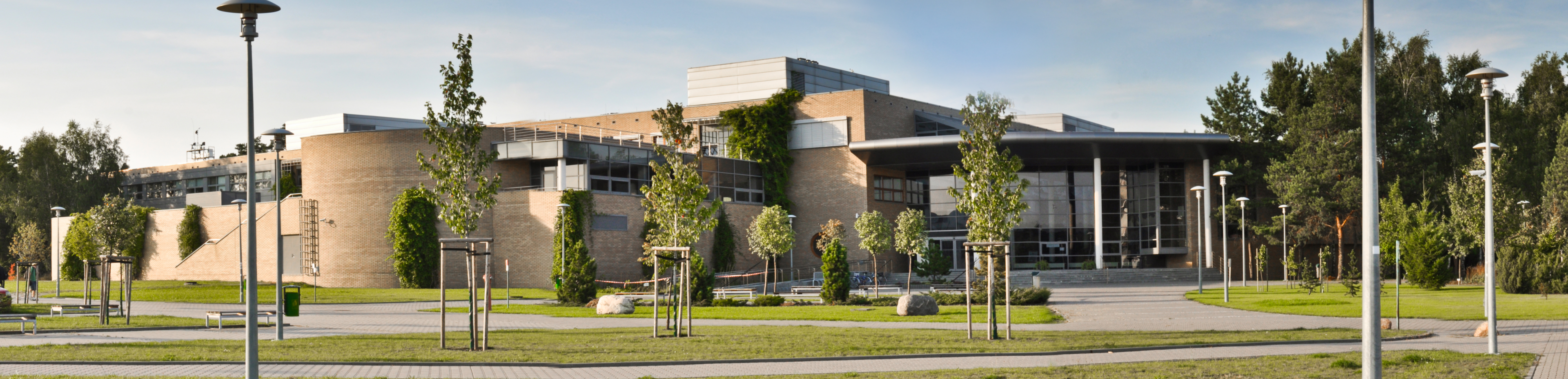
Venue
The meeting will take place on the newly founded Morasko Campus located 15 mins by tram from the city centre. The meeting will be hosted in the AMU Faculty of Biology building (Collegium Biologicum), in the Paczoski Auditorium, Uniwersytetu Poznańskiego 6 Street, 61-614 Poznan
Public Transport
One can easily reach the conference venue by getting off at the “OS. SOBIESKIEGO” tram/bus stop.
To plan your trip with a public transport, we suggest using “Jakdojade” website (www.jakdojade.pl) or app. For English app version on iOS, go to settings on your iPhone, find the app and change the preferred language to English.
To reach the conference venue from Ławica airport, the following route is suggested:
Take bus number 148 or 159, leave at “RONDO KAPONIERA”, take tram number 12, 14 or 15 (final destination “OS.SOBIESKIEGO”).
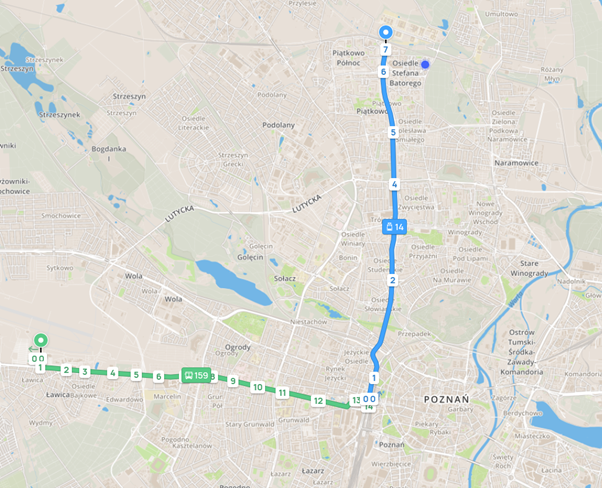
Uber/Bolt rides are also available, the approximate cost for a Ławica airport-conference venue route is 10€.
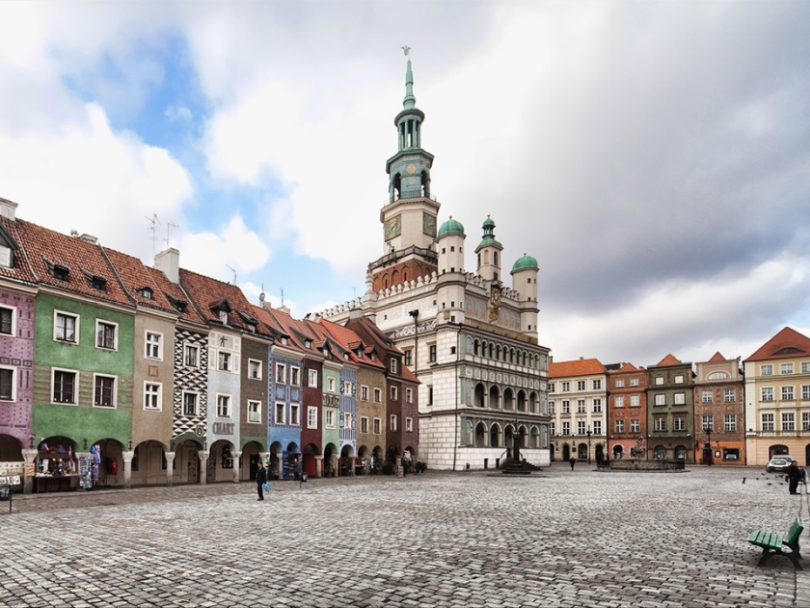
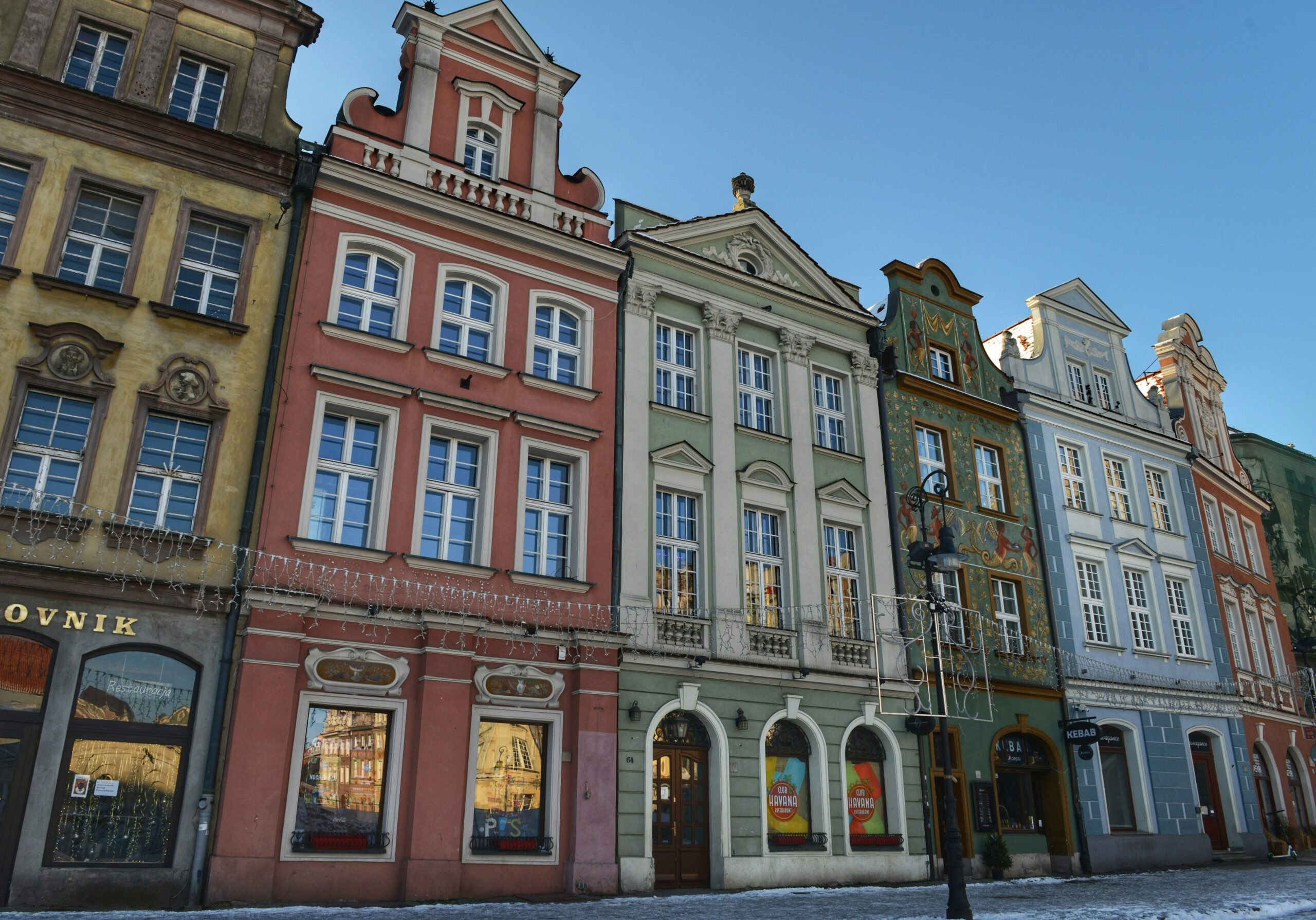
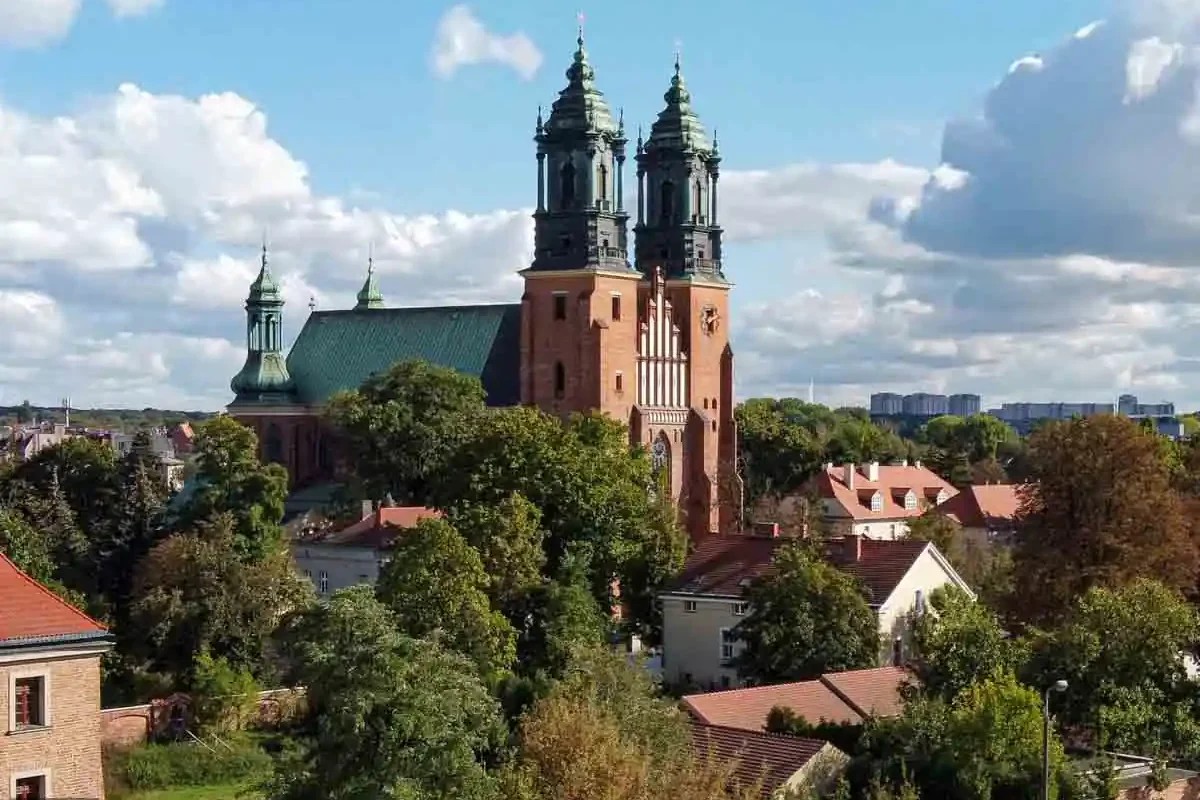
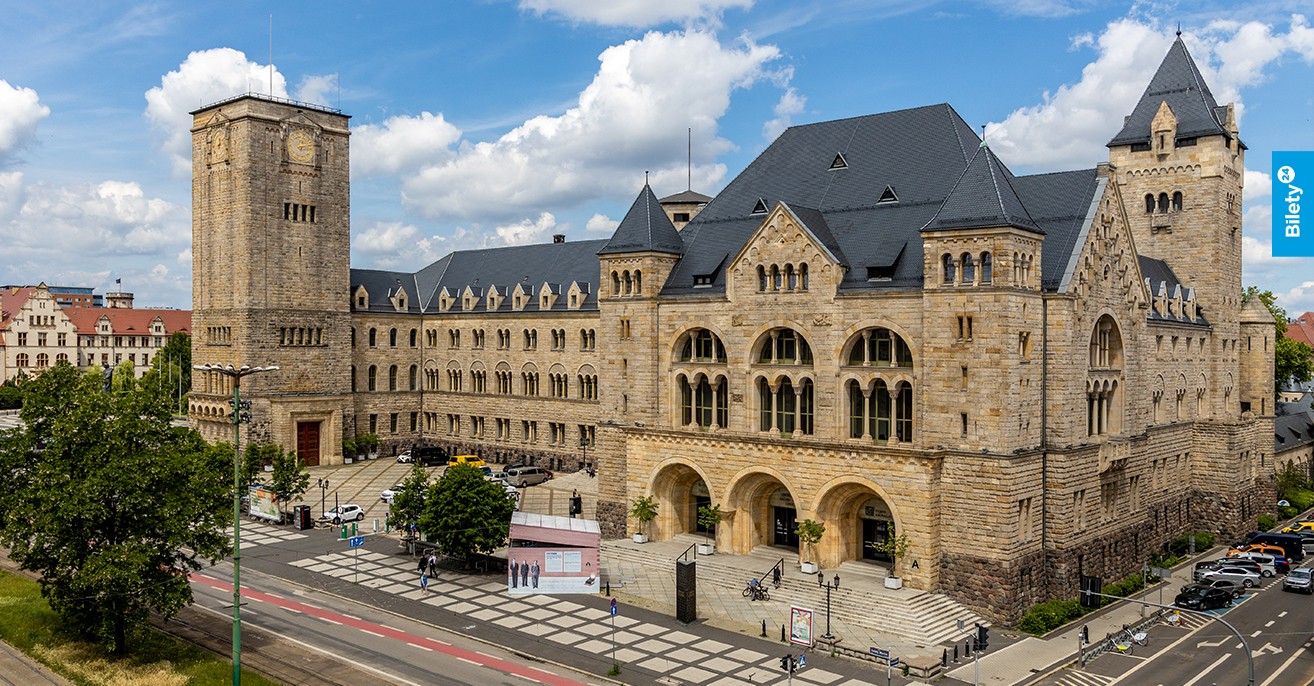
Poznań is a vibrant Polish city, located in the heart of Europe, halfway between Berlin and Warsaw. Journeys are easy as the city is very well connected with the major European and Polish cities including Frankfurt, Munich, Copenhagen, Warsaw and London.
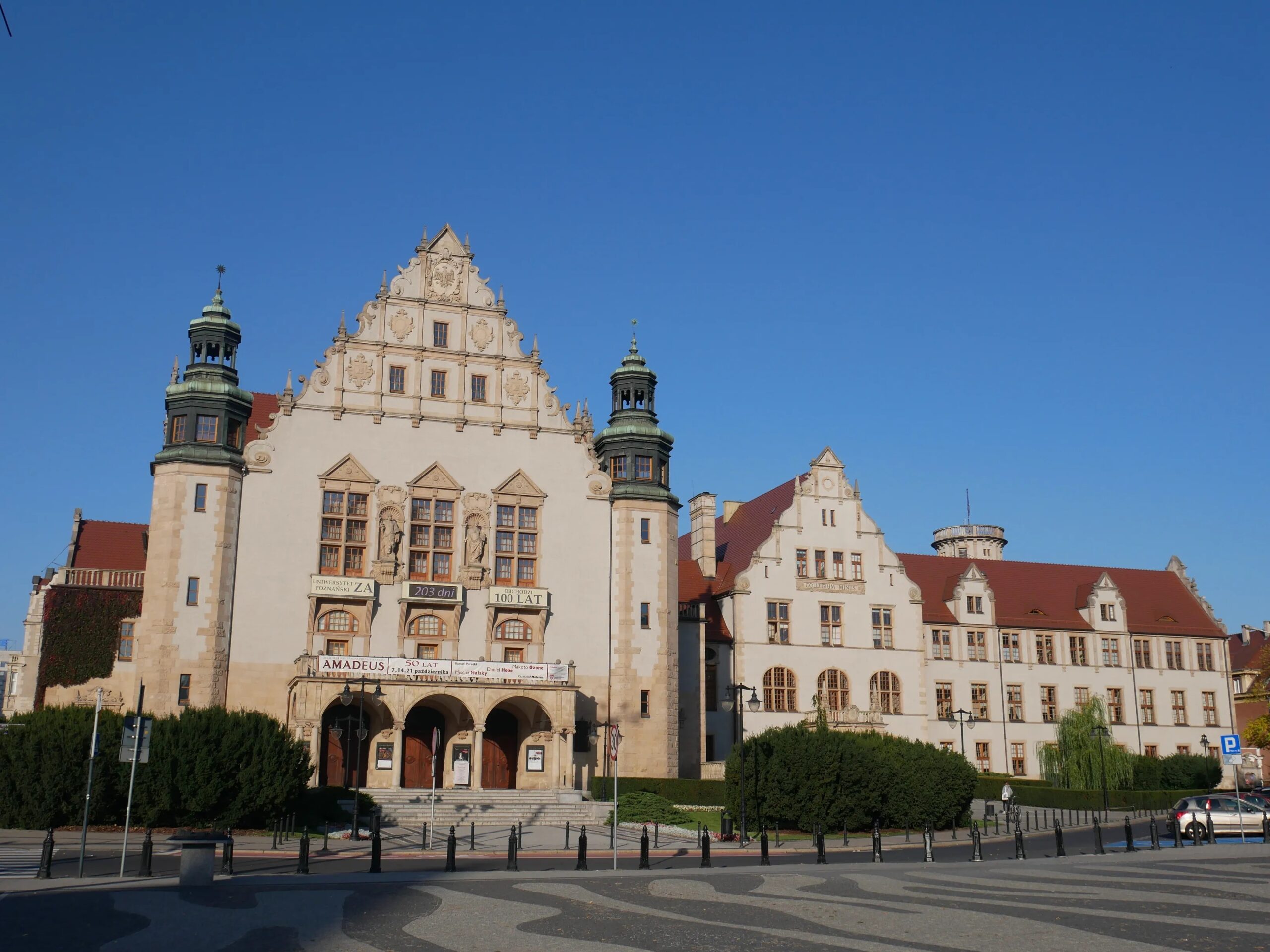
Moreover, Poznan is one of the biggest academic centres in Poland. The largest university in the city is Adam Mickiewicz University (AMU), where almost every third Poznan student is educated.
AMU is organized into 20 faculties, one of them being the Faculty of Biology, located in the north district of Poznań, at the Morasko Campus.













Contact
If you have any questions or experience any issues, please do not hesitate to contact us at pmm@amu.edu.pl.
We will make every effort to respond and assist you as promptly as possible.
PMM 2026 Organizing Committee
Piotr Ziolkowski
Maja Szymanska-Lejman
Karolina Spławska
Anna Wilhelm
Justyna Lalak-Kańczugowska
Organized by the Ziolkowski Lab